
Introduction to Sensors in IoT: Types, Working, and Real Examples
1. What is a Sensor?
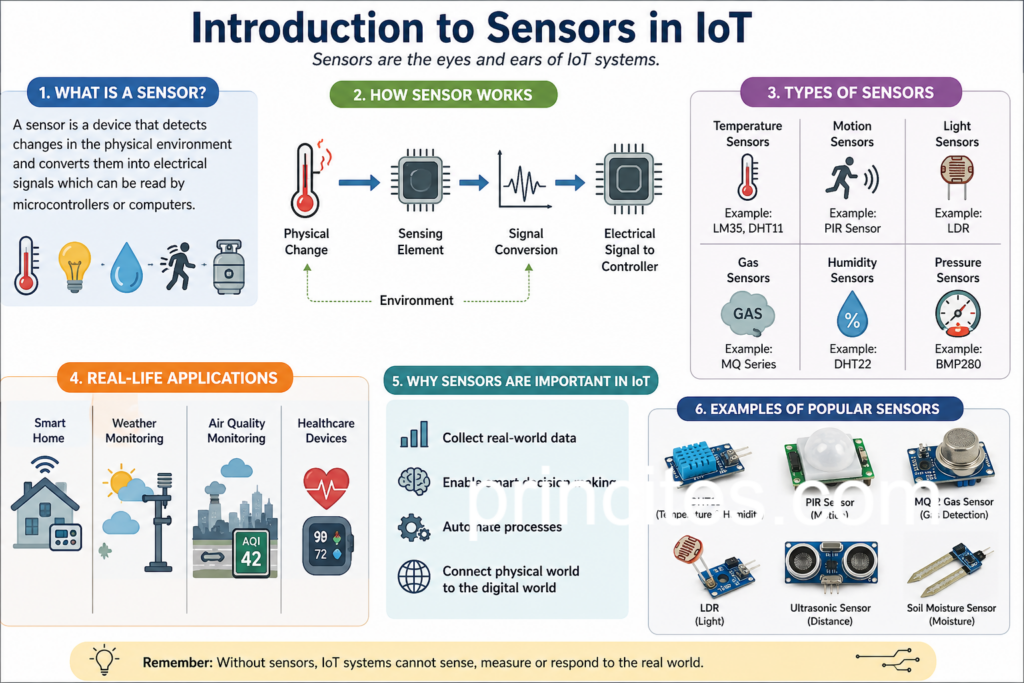
A sensor is a device that detects physical or environmental changes and converts them into electrical signals.
Examples of physical parameters:
- Temperature
- Light
- Motion
- Gas
- Humidity
2. How Sensors Work
Sensors follow this process:
Environment → Detection → Signal Conversion → Output
For example:
- A temperature sensor detects heat
- Converts it into voltage
- Sends it to microcontroller
3. Types of Sensors
a) Temperature Sensors
Measure temperature
Example: LM35, DHT11
b) Motion Sensors
Detect movement
Example: PIR sensor
c) Light Sensors
Measure light intensity
Example: LDR
d) Gas Sensors
Detect harmful gases
Example: MQ series
e) Humidity Sensors
Measure moisture in air
4. Real-Life Applications
- Smart homes
- Weather monitoring
- Air quality systems
- Healthcare devices
5. Why Sensors are Important in IoT
Sensors are the “eyes” of IoT systems. Without them, no data can be collected.
Further Reading
How do Collaborative Robots Work